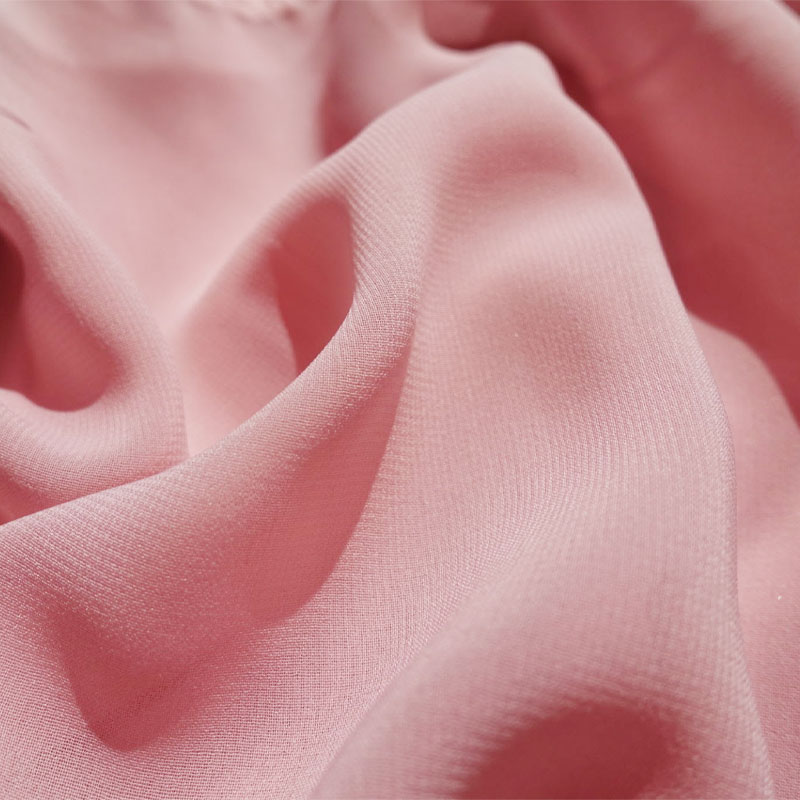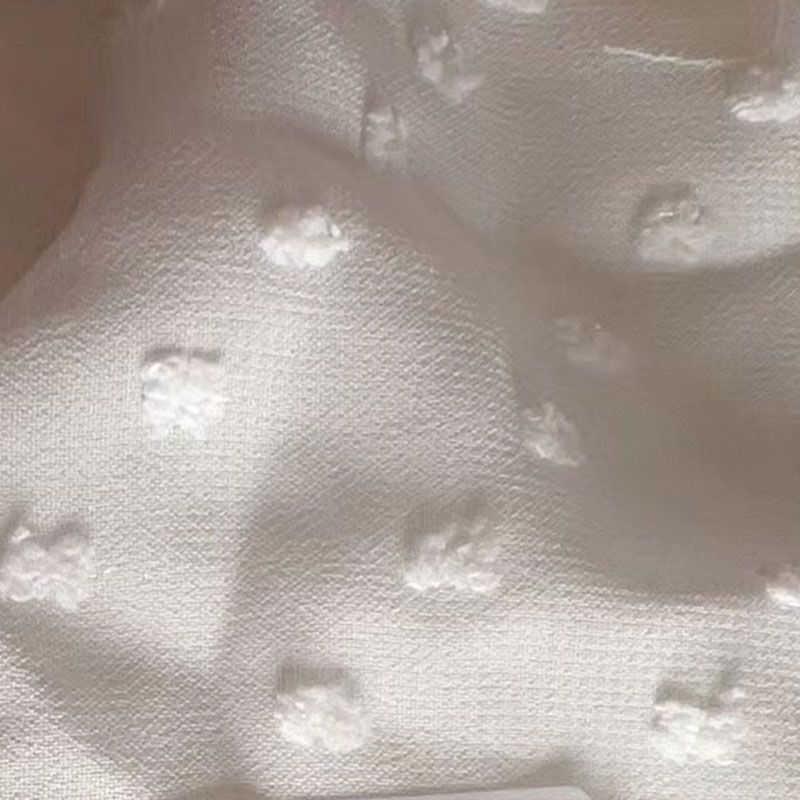



The best Chiffon Garment Fabrics for premium apparel are silk chiffon (8 to 12 gsm) for unmatched drape, polyester chiffon (15 to 30 gsm) for durability and print clarity, and nylon chiffon for stretch-sensitive designs. Fabric weight is the single greatest factor governing transparency and fluid movement -- lighter weights below 20 gsm produce sheer, ethereal silhouettes while heavier counts above 30 gsm deliver structured opacity with retained softness.
Best Fabric Composition for Chiffon Garment Fabrics
Chiffon is defined by its weave construction -- an open, balanced plain weave using highly twisted yarns -- rather than a single fiber type. This means the same gossamer aesthetic can be achieved across multiple fiber compositions, each with distinct performance properties that determine its ideal garment application.
Mulberry silk chiffon woven at 8 to 14 gsm represents the apex of the category. Its triangular fiber cross-section scatters light to produce natural luminosity impossible to replicate synthetically. Silk chiffon drapes with a weighted fluidity -- 0.02 to 0.04 N/mm bending rigidity -- that allows fabric to follow body contours without clinging. Haute couture gowns and evening wear from houses like Valentino and Marchesa specify 10 gsm silk chiffon precisely for this behavior. The trade-off is price: silk chiffon runs USD 25 to 80 per meter versus USD 3 to 12 for polyester equivalents.
Accounting for over 75% of commercial chiffon production, polyester chiffon spans 15 to 35 gsm and offers far greater wash durability than silk -- retaining dimensional stability after 50 machine wash cycles where silk chiffon requires dry cleaning. Its smooth, uniform fiber surface accepts digital and rotary screen prints with exceptional color saturation, making it the default choice for printed blouses, wrap dresses, and scarves in mass-market and contemporary fashion. Microfiber polyester chiffon at 15 to 18 gsm achieves near-silk softness at a fraction of the cost.
Nylon 6 and nylon 6,6 chiffons offer 15 to 20% more elongation at break than comparable polyester weaves, making them preferred for activewear overlays, dancewear, and lingerie. Nylon chiffon at 18 to 22 gsm resists snags better than polyester and accepts acid dyes that produce particularly vibrant jewel tones. Its moisture-wicking rate of 0.8 to 1.2 g/m2/hr also exceeds polyester, a meaningful advantage in body-contacting applications.
Silk-polyester blends (typically 30% silk / 70% polyester) split the difference between luxury hand-feel and practical washability at USD 10 to 18 per meter. Tencel (lyocell) chiffon, an emerging category, offers biodegradability and a cool, dry hand-feel suited to sustainable fashion lines. Rayon chiffon at 20 to 28 gsm drapes beautifully and dyes vividly but is prone to shrinkage of 5 to 8% without preshrink finishing, a factor that must be built into pattern grading.
| Fiber Type | Typical Weight (gsm) | Drape Quality | Washability | Best Application | Price Range / m |
|---|---|---|---|---|---|
| Silk | 8 to 14 | Exceptional -- fluid, weighted | Dry clean only | Couture, evening gowns | USD 25 to 80 |
| Polyester | 15 to 35 | Good -- uniform flow | Machine washable | RTW blouses, printed dresses | USD 3 to 12 |
| Nylon | 18 to 22 | Good -- slight stretch recovery | Machine washable | Dancewear, lingerie, overlays | USD 6 to 16 |
| Rayon | 20 to 28 | Very good -- soft, flowing | Hand wash / cool machine | Boho fashion, scarves | USD 5 to 14 |
| Silk-Poly Blend | 12 to 20 | Very good -- near-silk feel | Gentle machine wash | Mid-market eveningwear | USD 10 to 18 |
| Tencel / Lyocell | 18 to 25 | Good -- cool, dry hand | Machine washable | Sustainable fashion lines | USD 8 to 20 |
How Fabric Weight Governs Drape and Transparency in Chiffon
Weight per square meter (gsm) is the most actionable specification for designers and buyers selecting chiffon. It directly controls three garment behaviors that define whether a design succeeds: drape angle, transparency level, and movement response to body motion.
- Near-complete transparency -- requires lining in all bodywear
- Drape angle below 45 degrees -- fabric moves with minimal resistance
- Used exclusively in couture overlays, veils, and lingerie wraps
- Silk exclusive -- polyester cannot achieve structural integrity below 15 gsm
- Semi-transparent -- lining recommended for formal garments
- Optimal weight for printed blouses, maxi dresses, and draped sleeves
- Polyester and nylon available at this weight with good durability
- Achieves the classic chiffon movement visible in fashion runway presentations
- Opaque or near-opaque -- wearable unlined in many designs
- Retains chiffon softness and breathability while adding body
- Preferred for pleated skirts, wide-leg trousers, and tailored blouses
- Heavier polyester chiffon in this range is frequently used for digital print scarves
The Science Behind Drape: Twist and Weave Density
Chiffon's characteristic drape is not solely a function of weight -- yarn twist plays an equally important role. Standard chiffon uses S-twist and Z-twist yarns alternated in both warp and weft at 2,500 to 3,000 twists per meter. This high-twist structure creates micro-tension across the fabric plane, resulting in a slightly creped, grainy surface texture and the springy, airy quality that distinguishes chiffon from georgette (which uses more uniformly twisted yarns and produces a flatter surface).
Thread count also moderates weight impact on transparency. A 15 gsm fabric woven at 80 x 80 threads per inch will be more transparent than a 15 gsm fabric at 100 x 100 threads per inch, because the higher density partially compensates for low weight by reducing the aperture of individual weave interstices. Premium chiffon garment fabrics for eveningwear typically specify both gsm and thread count to control final aesthetics precisely.
Weight vs. Garment Type: Designer Reference Chart
| Garment Type | Recommended Weight (gsm) | Fiber Preference | Lining Required? |
|---|---|---|---|
| Bridal gown overlay | 8 to 12 | Silk | Yes -- full lining |
| Evening dress / gown | 10 to 18 | Silk or silk-poly blend | Yes |
| Printed blouse / top | 18 to 25 | Polyester microfiber | Optional |
| Maxi / wrap dress | 20 to 28 | Polyester or rayon | Optional |
| Wide-leg trousers | 28 to 35 | Polyester or nylon | No |
| Pleated midi skirt | 25 to 38 | Polyester | No |
| Scarf / accessories | 12 to 22 | Silk or polyester | No |
| Dancewear overlay | 16 to 22 | Nylon | Partial |
What Defines a Premium Chiffon Fabric?
The term premium chiffon fabric is used loosely in the market. These are the objective benchmarks that separate genuinely superior material from commodity goods trading on the name.
Premium chiffon uses long-staple mulberry silk or high-tenacity polyester filament with a denier of 20 to 40 D per yarn. Lower-grade fabrics use short-fiber or low-tenacity yarns that pill and snag after minimal use. Yarn tenacity above 4.5 g/D is a reliable marker of quality in polyester chiffon.
Premium chiffon undergoes jet dyeing or beam dyeing in exhaustion baths that achieve Delta E color variance below 0.5 across a dye lot -- meaning color is visually uniform across an entire production run. Fast fashion chiffon often shows Delta E of 1.5 to 3.0, producing visible color shifts between fabric cuts in the same garment.
Calendering and heat-setting at precise temperatures (165 to 175 C for polyester) stabilize yarn twist and lock thread count. This finishing step reduces shrinkage to below 2% versus 5 to 8% in unfinished fabric and gives the fabric its characteristic smooth hand-feel while preserving the airy texture that defines the chiffon aesthetic.
OEKO-TEX Standard 100 certification verifies absence of harmful chemicals across all 100+ tested substances. GOTS (Global Organic Textile Standard) certification applies to organic silk and Tencel chiffon. These certifications are increasingly required by European and North American apparel brands as supplier qualification criteria.
Sewing and Handling Considerations for Chiffon Fabrics
Even the finest premium chiffon garment fabrics present handling challenges that directly affect garment quality in production. Practical guidelines include using size 60 to 75 universal or microtex needles to avoid snag holes, setting stitch length to 2 to 2.5 mm to prevent seam distortion, and always stay-stitching curved edges before assembly. French seams or rolled hems are standard finishing techniques for chiffon -- serged edges fray and shift the fabric's airy aesthetic toward a utilitarian look inconsistent with the fabric's character.
Whether specifying ultra-sheer silk for couture or durable polyester microfiber for contemporary ready-to-wear, the right Chiffon Garment Fabrics selection starts with matching fiber composition and gsm weight to the precise demands of your design. The data above gives you the benchmarks to specify with confidence.